

Team
Service d'Etudes anglaises : Littérature, langue, interprétation et traduction
-
GHESQUIERE LobkeChef de service
- COPET Simon
- CUVELIER Odile
- DAMMAN Annick
- DE FARIA PIRES Loïc
- DELFERIERE Capucine
- DESMONS Axelle
- GEORGES Juliette
- GIANCOLA Kiara
- GUILLAUME Sylvie
- HODJIKJ Ena
- LEBURTON Corinne
- LOUCKX Audrey
- MARION Jesse
- MEYERS Charlène
- MOREAU Eponine
- OGBOURNE Kay
- ROBERTSON Jean
- SCOURNEAU Valentin
- TROUGHTON Faye
- VALVERDE Marine
- VEYS Mathieu
- VINCENT Valérie
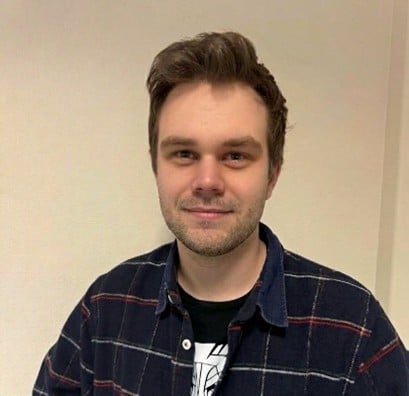 |
Simon Copet is a PhD candidate at the University of Mons and the Université libre de Bruxelles. He is also an active member of the Liège Game Lab.
His research lies at the intersection of game studies, translation studies, computer science, and computational linguistics. As a practitioner with a decade of experience in modding and reverse engineering, Simon applies techniques from these fields to build video game corpora, which underpin his broader research on the (machine) translation of creative elements within fictional worlds, conducted alongside his doctoral work. His doctoral research focuses on training machine translation and generative AI systems tailored to video game localisation, and on comparing post-editing and raw MT outputs across specialised and generic systems, as well as human translation. Ultimately, his work seeks to highlight the essential value of human creativity in an increasingly automated landscape. Ever curious and open to collaboration, Simon welcomes connections from both research and industry. He is always open to a conversation, so do not hesitate to reach out. Keywords: reverse engineering and data mining – game localisation – machine translation – corpus-based translation studies – creative translation |
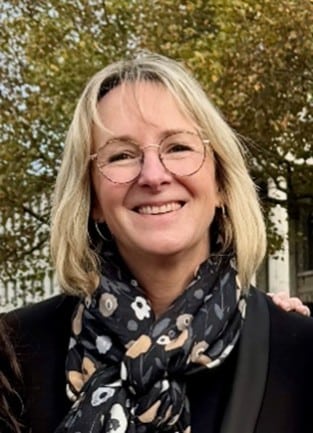 |
Odile Cuvelier is a translator and Chef de travaux who teaches English to French translation to MA students. She is also ELLIT’s coordinator for teaching activities and the Faculty’s focal point for the United Nations. As from october 2026, she’ll also be Programme Director for the Masters in translation.
Her areas of specialisation include sight translation, world news and international organizations. She also teaches Project management and Translation ethics, and coordinates ELLIT’s participation in the M1 Translation lab (Ateliers de traduction). She graduated from the FTI-EII (1990), where she studied English and Spanish to French translation. |
| Annick Damman | |
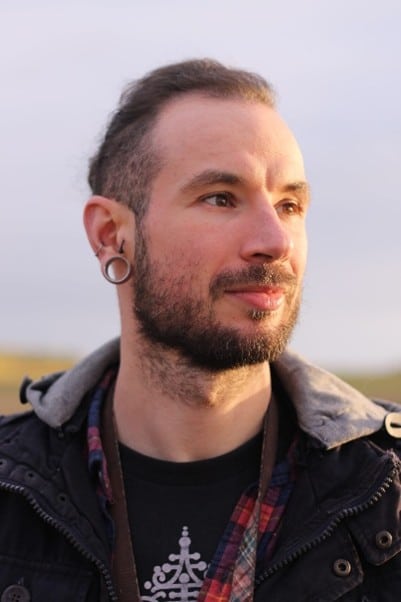 |
Loïc de Faria Pires is a full-time Associate Professor in the ELLIT unit. As the Faculty’s EMT representative, he plays an active role in the integration of EMT requirements into the Faculty’s teaching practices. He also represents the FTI-EII in other external groups such as DiGRA Belgium (Localisation research). From October 2026, he will be in charge of the Ancrage professionnel group created by the new Faculty Dean, in the framework of which he will manage many aspects of the professional opportunities for our future graduates.
His teaching and research activities are mainly linked to translation technology, EN-FR post-editing, localisation and audiovisual translation. His PhD thesis was about post-editing quality in institutional settings, and his current research matches his teaching activities, focusing on prompting and NMT/LLM PE quality and processes in localisation practices. He also carries out research in the field of Audiovisual Translation (AVT). He often gathers product (human and automated evaluation) and process (keylogging, eye-tracking, surveys, etc.) data to aim for comprehensive studies. He is therefore greatly interested in any PhD project in PE applied to localisation or AVT using these research methods. Finally, he has recently obtained a FNRS Welchange funding for a large-scale research project on AI and creative translation. Keywords: machine translation – post-editing – localisation – artificial intelligence – audiovisual translation |
| Capucine Delférière | |
| Axelle Desmons is a conference interpreter and chef de travaux who teaches consecutive and simultaneous interpreting.
Her main interest lies in conference interpreting. |
|
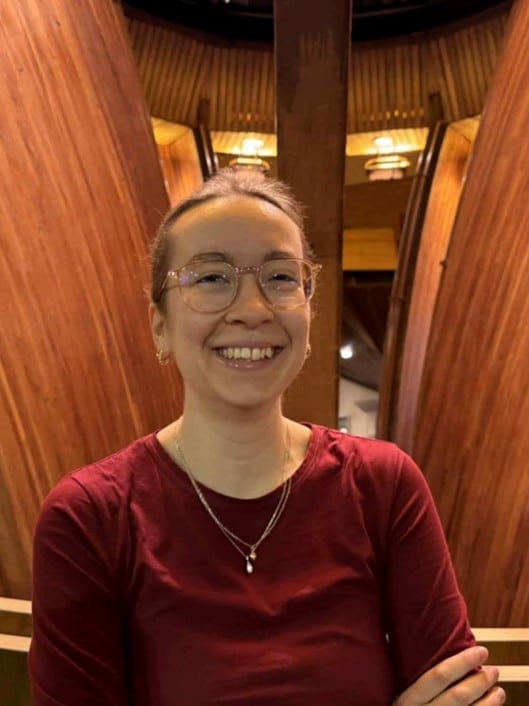 |
Juliette Georges is a teaching assistant in the ELLIT unit. She currently teaches one English language class focused on British culture to MA1 students. In addition, she works as a translator for the International Atomic Energy Agency (IAEA). In previous years, she has taught English language classes to BA2 students and Dutch language classes to secondary school students. Juliette also took an interest and gained some experience in terminology and in research while completing her MA programme at the FTI-EII.
Keywords: specialised translation – terminology database management (IATE) – English linguistics – corpus-based linguistics and translation studies – degree |
| Kiara Giancola | |
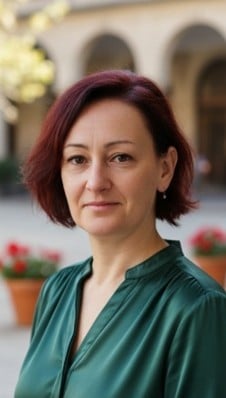 |
Lobke Ghesquière is professor and head of the English unit. As of October 2026, she will be the Faculty’s Deputy Dean for research. She is also a Research fellow of the Functional and Cognitive Linguistics research group of the KU Leuven. Since 2022 she has been Applied Linguistics Editor of the Benjamins journal English Text Construction. Her early research was mainly concerned with grammaticalization and (inter)subjectification phenomena in the English noun phrase, with a specific focus on intensification and focusing. More recently, her research has increasingly focused on corpus-based contrastive and translation research into subjectivity, including studies on degree and discourse organisational adverbs and on exclamatives.
Lobke teaches English language classes to BA students as well as text analysis and more research oriented classes to MA students. She is always interested in supervising MA or PhD theses on corpus-based (contrastive) linguistics or translation studies, but don’t hesitate to reach out with any idea in a related area that looks intriguing and challenging! Keywords: English linguistics – corpus-based (contrastive) linguistics and translation studies – (inter)subjectivity – degree |
| Sylvie Guillaume. Holding degrees in Law (Candidature), Communication (Licence), Etudes européennes (IIIème cycle) and Translation (Licence), Sylvie Guillaume teaches Written & Sight Translation (Bac2), Communication Strategies + TCI/Théorie de la Communication Interculturelle (M1) and CE/Communication écrite-WC/Written Communication + CO/Communication orale-OC/oral Communication (M2).
Sylvie’s teaching interests are (among others) the following: · written, sight, literary and legal translation; · intercultural communication and negotiation; · political sciences, international relations, geopolitics and sociology; · philosophy;
|
|
 |
Ena Hodzik is a C2W Marie Skłodowska Curie Research Fellow working on a research project titled Predictive processes in sight translation from English into French, supervised by Lobke Ghesquière and Laurence Meurant (UNamur). She holds a BA in Interpreting from the University of Ss. Cyril and Methodius in Skopje, North Macedonia, an MPhil in English and Applied Linguistics from the University of Cambridge and a PhD in Theoretical and Applied Linguistics from the University of Cambridge (obtained in 2013 and supervised by John. N. Williams). She previously worked as Assistant Professor of Translation and Interpreting Studies at Boğaziçi University in Turkey (2017-2024) and as part-time lecturer (2014-2015) and Assistant Professor (2015-2017) of English Language and Linguistics at Notre Dame University-Louaize in Lebanon.
Her research focuses on prediction across language pairs and bilingual populations. She is particularly interested in whether a) there is an interpreting experience related advantage for prediction, b) prediction correlates with level of bilingualism and working memory skills, and c) prediction is associated with better interpreting performance. She has also worked on interdisciplinary research projects in corpus-based translation studies and machine translation. |
| Corinne Leburton is a senior teaching associate in the ELLIT unit.
After getting a Bachelor’s degree in translation (English – Spanish) from the Hoger Instituut voor Vertalers en Tolken at the University of Antwerp, she obtained a Master’s degree in Germanic philology from the ULB (Université Libre de Bruxelles). She taught for two years in a secondary school before joining the EII in 1990 to teach English language classes. She has had the opportunity to teach a great number of subjects ranging from English literature to translation (at BA and MA level). She currently teaches language in BAB3, specialized economic translation in MAB1, and an optional class on English theatre. She first participated in and later took over as producer of the EII English Theatre Group, which performs a play on stage every year. For a long time, she was the head of the English department and Secretary of the Conseil facultaire. |
|
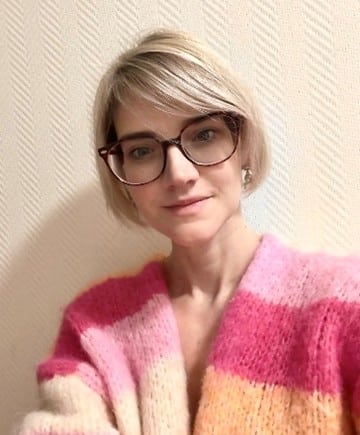 |
Audrey Louckx is an Associate Professor and the Faculty Advisor for Education. She is also ELLIT’s academic coordinator for outgoing Exchange students. She obtained her PhD in American contemporary nonfiction at ULB in 2013.
She teaches English language classes and classes devoted to British and American society and culture. Her main interests lie in cultural studies and intermediality. She focuses on the cinematographic and television adaptation of literature in English and intertextuality, mainly (though not exclusively) in American pop culture. As an animation fan, her recent works have focused on animated films ranging from Disney and Pixar to Studio Ghibli and Cartoon Saloon. Keywords: literature in English – adaptation – intertextuality – pop culture – animation |
| Jesse Marion teaches within the ELLIT unit at the Faculty of Translation and Interpretation (UMONS), covering English language, English-French written translation, general translation and introduction to localisation, AI-assisted subtitling, and courses in the didactics programme.
His main interests include translation, pedagogy, localisation, AI in translation, and post-editing. Keywords: translation – pedagogy – localization – AI in translation – subtitling – post-editing |
|
 |
Charlène Meyers is a translator, teacher and researcher at the University of Mons (FTI-EII) where she obtained a Master’s degree in Translation, a Specialized Master’s degree in Applied Linguistics and a PhD in Languages, Literature and Translation Studies. She is currently a senior research and teaching associate. Her research interests include cognitive linguistics (with a focus on conceptual metaphors), specialized translation and terminology with an emphasis on inferential statistics and digital technologies. She teaches courses related to her research interests, including scientific and technical translation, terminology, quantitative analysis and AI applied to data processing and visualization.
Keywords: specialized translation – cognitive linguistics – conceptual metaphor theory – statistical linguistics – AI – data visualization |
| Eponine Moreau | |
| Kay Ogbourne | |
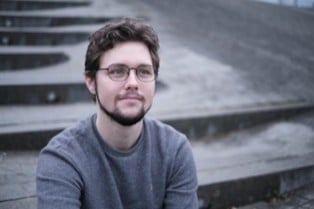 |
Alexandre Rekaris is a passionate language teacher with a background in English and German translation. He graduated with a Master’s in Translation from the University of Mons, specialising in didactics. After an Erasmus+ internship at the Ruhr-Universität Bochum, where he taught translation to German students, Alexandre trained future language teachers at the Haute École en Hainaut and taught English at the secondary school level. Currently, he serves both as an Adjoint pédagogique for the Cellule de pédagogie facultaire, working with first-year English students (BAB1) at the FTI-EII, and as a Maître de langue at the Faculty of Engineering, teaching English to architects and engineers-to-be. |
| Jean Robertson | |
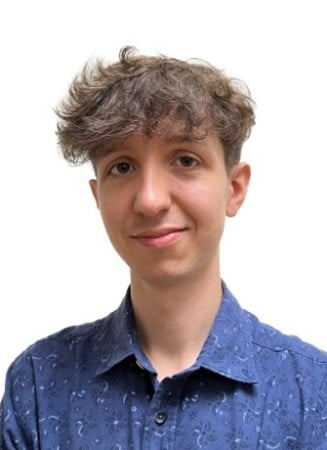 |
Valentin Scourneau is a PhD student working under the joint supervision of Loïc De Faria Pires (UMONS) and Véronique Lagae (Université Polytechnique Hauts-de-France).
After obtaining his MA degree in Multidisciplinary Translation at UMONS, with English and German as working languages, Valentin worked as a staff translator, then as a secondary school English teacher. As part of his PhD research, he is now exploring the differences in linguistic metrics of editorials that were translated from scratch, post-edited by humans, or automatically post-edited by a large language model from English to French, and their potential impact on preference among readers. His research interests include post-editing products and processes, the phenomena of translationese and post-editese, and the linguistic differences between AI-generated and human texts. Keywords: post-editing – linguistic metrics – fluency – translationese – generative AI |
| Faye Troughton is a teaching and research associate in the ELLIT unit. She defended her PhD thesis Translation and Categorisation: The English and French Exclamative at the University of Mons in 2024. Her current research interests include corpus-based contrastive and translation studies, the exclamative construction (its form, meaning, and development), and the contribution of translation studies to wider linguistic theory.
Faye currently teaches English language to first year BA students, French to English interpretation and translation to MA students, as well as research-related classes. She also co-ordinates ELLIT’s incoming Erasmus students. She would be happy to supervise MA or PhD theses in or related to her areas of expertise. Keywords: Corpus-based translation and contrastive studies – English linguistics – exclamatives – exclamatory speech acts |
|
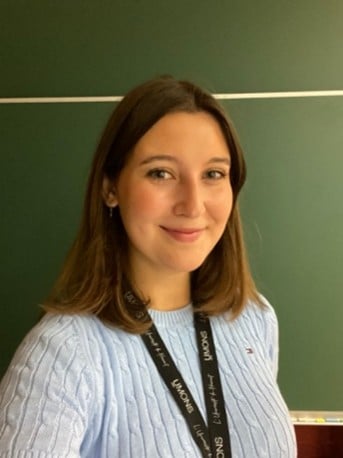 |
Marine Valverde is a temporary assistant in the ELLIT unit. She graduated from the Faculty of Translation and Interpretation with a Master’s degree in Multidisciplinary Translation in English and Spanish, and is currently pursuing a Master’s degree in Didactics at the Université Libre de Bruxelles.
She teaches English language classes to first-year BA students, with a particular focus on speaking and grammar. In addition to her teaching, Marine has been involved in co-organising various activities for the Faculty and the ELLIT unit. She is especially interested in developing new projects and contributing to student life. |
| Mathieu Veys is a teaching assistant and a PhD researcher in the ELLIT unit. He holds a BA in Translation and Interpreting (University of Mons, 2018), an MA in Conference Interpreting (University of Mons, 2020) and a Postgraduate degree in Dutch and Translation (Ghent University, 2021).
He currently teaches English proficiency courses, with a particular focus on speaking and listening skills, and English-French translation. His doctoral project (2022-2028) is grounded in the field of cognitive translation and interpreting studies. Using eye-tracking technology, his study aims to examine the impact of syntactic complexity on cognitive processes during sight interpreting/translation, as well as the effect that training has on such processes. Keywords: cognitive translation and interpreting studies – second language acquisition – process-oriented research – mixed-methods research – eye-tracking |
|
| Valérie Vincent |