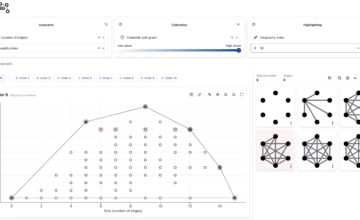
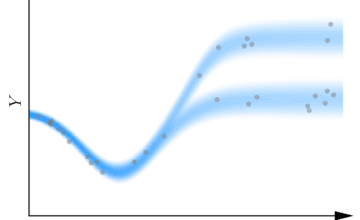
Anomaly detection seeks to identify rare and abnormal events that deviate from expected behaviour, a task central to safety-critical domains such as industrial monitoring and energy systems. However, its real-world deployment remains challenging due to co-occurring heterogeneous anomalies, contaminated training data, complex temporal dynamics, and unreliable decision-making thresholds. Sukanya Patra made four complementary contributions in her thesis towards addressing these critical gaps. Her dissertation is supervised by Prof. Souhaib Ben Taieb and Prof. Stéphane Dupont.
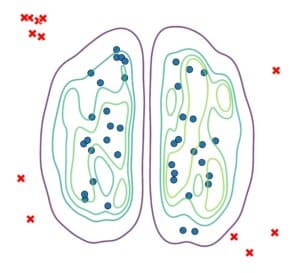 Date :
 Friday December 12, 2025 at 15h, Mirzakhani Room (De Vinci Building), Plaine de Nimy, Av. Maistriau 15, 7000 Mons
Title : Deep Visual Anomaly Detection under Data Contamination and Anomaly Heterogeneity
Abstract :
Anomaly detection (AD) is the task of identifying rare and unusual events that deviate from expected behaviour. It plays a crucial role in various high-stakes domains, including industrial quality inspection, healthcare, fraud detection, and predictive maintenance. A standard approach involves learning a « compact » representation of the normal samples. Once this notion of normality is established, instances that significantly deviate from it are identified as anomalies. Traditional shallow AD methods often struggle in high-dimensional data settings due to the curse of dimensionality, where the performance deteriorates as the number of input features grows. Consequently, deep learning-based methods have gained attention due to their ability to learn effective representations directly from the data.
Despite remarkable progress in deep learning, the practical deployment of deep AD models remains hindered by several fundamental challenges. This thesis advances the field through four key contributions, each addressing specific practical limitations of existing approaches. The work is conducted as a part of the Federated Learning and Augmented Reality for Advanced Control Centres (FLARACC) project, which aims to develop solutions for real-world industrial problems. FLARACC is a collaboration among the University of Mons, the University of Namur, John Cockerill, IBA and CETIC.
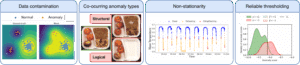
First, in real-world applications, different types of anomalies often occur simultaneously, rendering existing methods ineffective as they typically focus on a single anomaly type. As our first contribution, we develop a unified method for the detection of both structural and logical anomalies. The proposed method achieves competitive performance across multiple benchmark datasets, demonstrating the ability to detect co-occurring anomaly types.
Second, contamination in the training dataset undermines the common assumption that training datasets are « clean », i.e. free of anomalous samples. To address this, our second contribution introduces two complementary strategies. In semi-supervised AD, we propose two risk-based estimators: a shallow method with a regularised unbiased risk estimator and a deep method employing a non-negative risk estimator, both supported by theoretical guarantees. In the fully unsupervised setting, we develop a test-time adaptation framework that dynamically adjusts model predictions using exponential tilting, improving robustness against contamination without requiring labelled data.
Third, motivated by a real-world use case of AD in solar power plants from John Cockerill, we address the challenge of learning effective representations for AD given a thermal image dataset with complex temporal features such as non-stationarity, strong daily seasonal patterns, irregular sampling intervals, and temporal dependencies. Our third contribution proposes a forecasting-based AD framework, where a deep sequence model predicts the next thermal image under normal operating conditions. Then, anomalies are identified as deviations between predicted and observed thermal images. This approach enables the detection of anomalous behaviours by capturing temporal dynamics and extracting meaningful representations from thermal data.
Finally, while deep learning-based methods can learn expressive representations, they often produce unreliable and overly optimistic predictions, which is harmful for safety-sensitive applications. To address this, our fourth contribution proposes a risk-controlling thresholding strategy for anomaly scores that ensures finite-sample performance guarantees for any user-defined risk function, including false positive rates and F1-scores. This contribution builds upon the distribution-free Learn then Test framework and introduces two adaptive thresholds accounting for overlap between normal and anomalous score distributions. In addition, we develop a density-forecasting-based AD model using conditional normalising flows to support likelihood-based anomaly scoring.
Overall, these contributions advance the methodological foundations of deep AD and strengthen its applicability to safety-critical domains, paving the way for more reliable deployment in real-world systems.