Logo de l'UMONS – Université de Mons
  • Répertoire
  • en
  • fr
  • en
  • Accueil
  • Actualités du service
  • Agenda du service
  • Activités d’enseignement
  • Activités de recherche
    • Publications
  • Équipe
  • Contacter le service
  • Nos réseaux
    • Intranet
Retourner sur le site web de l'UMONS UMONS

Service / FS – Synthèse et Spectrométrie de Masse Organiques

Retour à « Toutes les nouvelles »
  1. Accueil
  2. New article on microwave-assisted depolymerization of polysaccharides by Tiffani Bouanati
Recherche

New article on microwave-assisted depolymerization of polysaccharides by Tiffani Bouanati
Publié le 21 septembre 2020
Rédigé par Eric Weverbergh
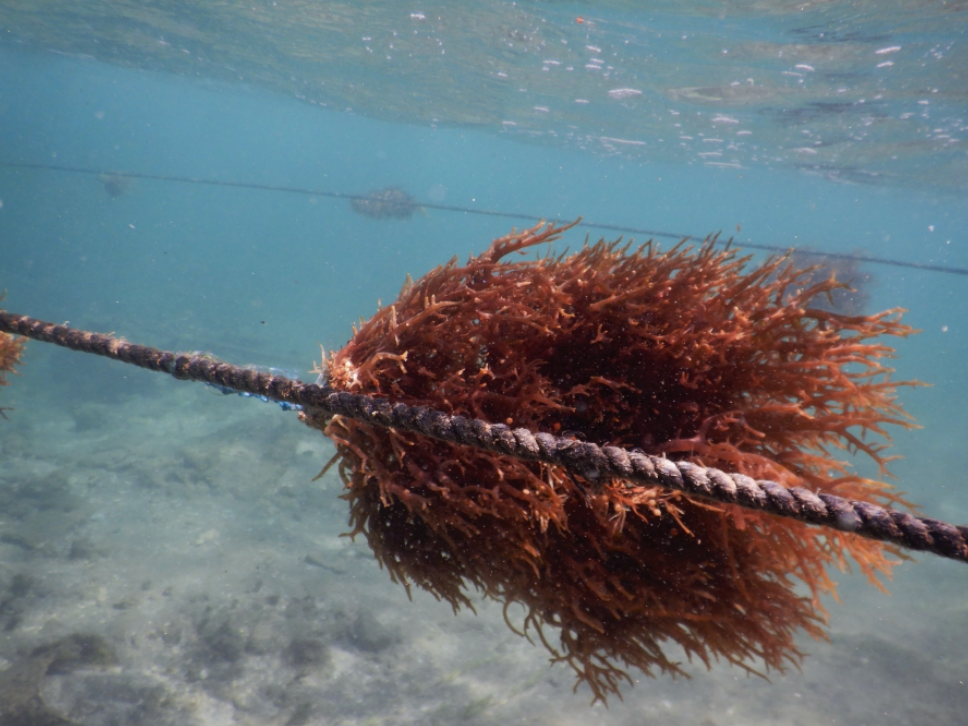
Algae biomass is nowadays considered as a unique reservoir of a huge variety of different molecules, such as lipids, carbohydrates, proteins and secondary metabolites, awaiting development in various fields. In particular, the valorization of the algae polysaccharide content is still in its infancy and intense research activity is starting to appear.
Microwave-assisted depolymerization of carrageenans from Kappaphycus alvarezii and Eucheuma spinosum : controlled and green production of oligosaccharides from the algae biomass

A new paper entitled “Microwave-assisted depolymerization of carrageenans from Kappaphycus alvarezii and Eucheuma spinosum : controlled and green production of oligosaccharides from the algae biomass  » has been recently published in Algal research.

Algae biomass is nowadays considered as a unique reservoir of a huge variety of different molecules, such as lipids, carbohydrates, proteins and secondary metabolites, awaiting development in various fields. In particular, the valorization of the algae polysaccharide content is still in its infancy and intense research activity is starting to appear. Oligosaccharides with defined molecular weight and structures are extremely interesting for different applications such as plant biostimulation or biopesticide. Oligosaccharide are often prepared in medium to large scale upon chemical-based hydrolysis reactions from the extracted polysaccharides in harsh conditions (temperature and pH), leading to the loss of the fragile groups such as the sulfate functions in carrageenans. In the present work, microwave-based hydrolysis, as a green chemistry method, is optimized to produce bioactive oligosaccharides from carrageenans

Tiffani Bouanati, Emmanuel Colson, Sébastien Moins,Juan-Carlos Cabrera,Igor Eeckhaut, Jean-Marie Raquez, Pascal Gerbaux

https://doi.org/10.1016/j.algal.2020.102054
 

  • Facebook
  • LinkedIn
  • Imprimer

Navigation de l’article

Précédent Poste précédent : New paper published in Polymers (open access) in collaboration with Prof Philippe Zinck from the University of Lille.
Suivant Poste suivant : New paper published in collaboration with Prof. Angela Scala (University of Messina)

En lien avec ce que vous venez de lire

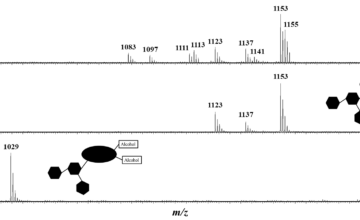
  • MALDI mass spectra (positive ionization mode) of three different saponin extracts: (a) Natural extract (NE); (b) Escins I, II and III enriched-extract (EE) obtained by flash chromatography separation (non-polar column–acetonitrile gradient); (c) Microwave-assisted alkaline hydrolysis (pH 14–150 °C–5 min) reaction extract (HE). The molecular structures are schematized by highlighting the targeted functions: in EE saponins, the esters are located on C21 (Tig or Ang) and C22 or C28 (Ac); in the HE saponins, the hydrolysis products possess alcohol groups on C21, C22, and C28.
    23 février 2023

    Horse Chestnut Saponins–Escins, Isoescins, Transescins, and Desacylescins

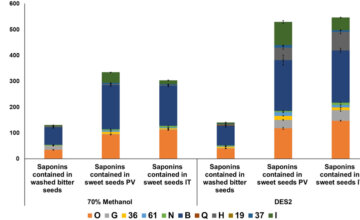
  • Relative amounts of saponins identified in the samples: water-washed bitter seeds, sweet seeds PV, and sweet seeds IT, extracted either with 70% methanol or DES2 (choline chloride - glycerol - water at a molar ratio 1:2:1). The solvent/sample ratio is 20:1 (w/w) to all samples. The structures of the different saponins are described in Table 1 n = 3 technical replicates.
    20 août 2022

    Deep eutectic solvents for the extraction and stabilization of Ecuadorian quinoa (Chenopodium quinoa Willd.) saponins

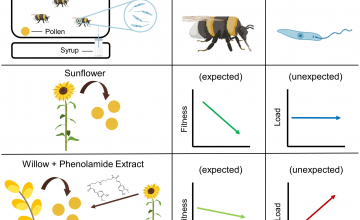
  • Poison or Potion: Effects of Sunflower Phenolamides on Bumble Bees and Their Gut Parasite
    24 mai 2022

    Poison or Potion: Effects of Sunflower Phenolamides on Bumble Bees and Their Gut Parasite

Actualités

  • Horse Chestnut Saponins–Escins, Isoescins, Transescins, and Desacylescins
    Non classé

    Horse Chestnut Saponins–Escins, Isoescins, Transescins, and Desacylescins

    23 février 2023
    Escins constitute an abundant family of saponins (saponosides) and are the most active components in Aesculum hippocastanum (horse chestnut—HC) seeds. They are of great pharmaceutical interest as a short-term treatment for venous insufficiency. ... Poursuivre la lecture
  • Deep eutectic solvents for the extraction and stabilization of Ecuadorian quinoa (Chenopodium quinoa Willd.) saponins
    Non classé

    Deep eutectic solvents for the extraction and stabilization of Ecuadorian quinoa (Chenopodium quinoa Willd.) saponins

    20 août 2022
    In this work, a simple, fast (10 min) and environmentally friendly extraction method using deep eutectic solvents (DES), based on choline chloride and glycerol, was established to extract saponins from five quinoa samples... Poursuivre la lecture
  • Poison or Potion: Effects of Sunflower Phenolamides on Bumble Bees and Their Gut Parasite
    Non classé

    Poison or Potion: Effects of Sunflower Phenolamides on Bumble Bees and Their Gut Parasite

    24 mai 2022
    In this work, we tested the impacts of sunflower phenolamides on healthy and parasite infected buff-tailed bumble bees. Expectedly, sunflower pollen had harmful consequences on bumble bee development but surprisingly, it did not alter parasite load. By contrast, sunflower phenolamides had milder effects on bumble bee development but unexpectedly increased parasite load. Poursuivre la lecture
UMONS logo
Avenue Maistriau , 15
7000 Mons
Belgique
Tél. : +32 (0)65 37 33 42
Contacts généraux
© UMONS 2026
Chatbot UMONS Uguette, votre assistante virtuelle
NEW : Parler avec Uguette, votre assistante virtuelle !
Uguette, votre assistante virtuelle