

SMT37 – 37th Conference on Surface Modification Technologies
The 37th International Congress on Surface Modification Technologies (SMT37) aims to cover progress on all aspects of surface modification technologies. The conference will address industrial materials (metals, alloys polymers, ceramics, composites, …) and advanced materials and processes, from the macroscopic to the microscopic standpoint.
Producers, users and researchers, engineers and scientists that have an interest in Surface Modification will be brought together for this event, in order to facilitate and encourage, the exchange of knowledge, experience and ideas among the community of people that use, improve, develop, research and assess surface modification processes.
Conference Chairs
- Dr. Tirumalai S SUDARSHAN (MatMod Inc)
- Dr Francesco DELLORO (Mines Paris – PSL)
- Prof. Véronique VITRY (UMONS)
Organising Committee
- Prof. Fabienne DELAUNOIS, UMONS
- Inass LEBBAR, Mines Paris
- Dr Patrizio LOMONACO, TU Delft
- Dr Alexandre MÉGRET, UMONS
- Dr Lara Moreno TURIEGANO, UMONS
- Prof. Marjorie OLIVIER, UMONS
- Prof. Damien THIRY, UMONS
- Dr Romain TRONCY, IS2M-University of Haute-Alsace
- Prof. Jon USTARROZ, ULB
Scientific Committee
- Vicente ALBALADEJO, University of Barcelona, Spain
- Joel ALEXIS, ENIT Tarbes, France
- Antonello ASTARITA, University of Naples “Federico II”, Italy
- Sara BAGHERIFARD, Politecnico di Milano, Italy
- Oksana BANAKH, Haute Ecole Arc Ingenierie, Switzerland
- Giovanni BOLELLI, University of Modena and Reggio Emilia, Italy
- Michel BOUSTIE, École Nationale Supérieure de Mécanique et d’Aérotechnique, France
- Pierpaolo CARLONE, University of Salerno, Italy
- Andrew COBLEY, Coventry University, UK
- Sergi DOSTA, Universitat de Barcelona, Spain
- Karine FROMENT, ARC-Nucléart, CEA, France
- Belen GARCIA, Cidetec, Spain
- Miguel Ángel GARRIDO MANEIRO, Universidad Rey Juan Carlos, Spain
- Alessandra GIUMLIA-MAIR, Italy
- Jean-Yves HIHN, Université Marie et Louis Pasteur, France
- Chunjie HUANG, Northwestern Polytechnical Univerisity, China
- Heli KOIVULUOTO, Tampere University, Finland
- Julien MARTIN, Université de Lorraine, France
- Alex MONTAGNE, Université Polytechnique Hauts de France, France
- Pedro POZA, Universidad Rey Juan Carlos, Spain
- Caroline RICHARD, Université de Tours, France
- Felice RUBINO, University of Salerno, Italy
- Dilip SARKAR, Université du Québec à Chicoutimi, Canada
- Mariana STAIA, Universidad Central de Venezuela, Venezuela
- Natalia TINTARU, Vilnius University, Lithuania
- Stéphane VALETTE, Ecole Centrale de Lyon, France
- Liang WU, Chongqing University, China
- Ann ZAMMIT, L-Università ta’ Malta, Malta
- Mikhail ZHELUDKEVICH, Hereon, Deutschland
- Thermal and cold spray
- Electro- Electroless plating
- Surface texturation, hydrophobic./philic surfaces
- Mechanical surface treatments
- Sol-gel and organic coatings
- Anodisation, PEO & conversion Coatings
- Surface characterization
- Corrosion
- Tribology
- Additive manufacturing
- Coatings for the food industry & medical applications
- PVD and CVD coatings & thin films
- Functional and smart coatings (conductivity, shielding, catalysis, chromogenic,….)
- Biomimetic and bio-inspired surfaces
- Plasma Electrolytic Cleaning and Polishing
A special symposium about Surface treatment for art & heritage : the Symposium ‘Arts and Surfaces‘ will take place on April 24th.
SMT37 will be the occasion to listen to four plenaries by experts of various areas of the field of Surface Modification.
- Dr Alessandra GIUMLIA-MAIR
- Dr Stephanos KONSTANTINIDIS
- Tirumalai S SUDARSHAN
- Stéphane VALETTE
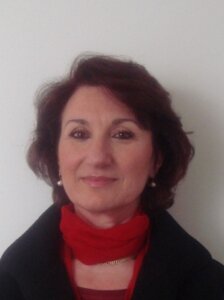 Dr Alessandra GIUMLIA-MAIR
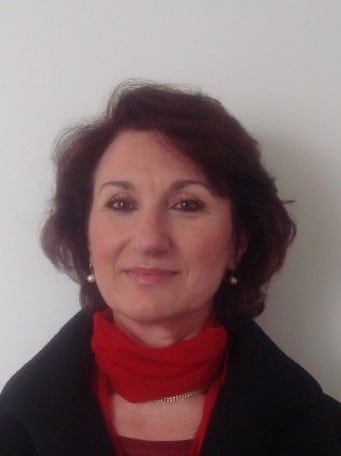
BIO
Alessandra Giumlia-Mair, Doctor Philosophiae in Archaeology from the University Alma Mater Rudolphina of Vienna and Master of Science in Archaeometallurgy from the University of London. She has lived and worked in Austria, Great Britain, Germany, and Italy.
From 1991 to 2001, she taught Archaeometallurgy and Archaeometry at the Universities of Salzburg (Austria), Trieste, and Udine (Italy). She has also been an invited lecturer at the Universities of Trento, Milan, Turin, Osaka, Klagenfurt, Ljubljana, Paris, Bangalore, Trivandrum, Brussels, Tokyo, Nara, and others.
In 2000, she founded AGM Archeoanalisi, a laboratory specializing in archaeometry, particularly in the analysis of ancient metals. She collaborates with numerous universities, superintendencies, and other official institutions on various research projects.
From December 2020 to December 2023, she was Director of the Research Laboratory at the Institute of Archaeology, Russian Academy of Sciences, Moscow, Russian Federation.
She has studied objects belonging to major museum collections in the United Kingdom, Canada, Germany, Switzerland, Romania, Slovenia, Hungary, Austria, France, Greece, Cyprus, and Italy.
She has published over 250 scientific papers, books, and conference proceedings, and has organized several archaeological exhibitions as well as more than 30 international conferences.
Dr. Giumlia-Mair is a member of the Standing Committees of international conferences such as BUMA (Beginning of the Use of Metals and Alloys), President of the Standing Committee of the International Conference Archaeometallurgy in Europe, Vice-President of the Standing Committee of the Classical Bronze Conference, and Secretary of the Archaeometry Commission of the International Union of Prehistoric and Protohistoric Sciences (UISPP). She has also served on the organizing and scientific committees of numerous international conferences.
TALK
Black variations on metals in antiquity: an updated survey
In antiquity, decorative items, objects of art, luxurious tools, such as medical instruments, vessels, and ceremonial weapons were often partly or completely blackened by using different techniques.
The best-known black material is niello, in use since the 5th century BCE around the Black Sea area and from the 1st century AD in the Roman empire. It consists of various kinds of black metal sulphides.
Bluish-black or purplish black artificially patinated alloys, developed in chemical baths on copper-based alloys containing small amounts of gold and silver were for a long time mistaken for niello. However, such materials were already known in Egypt as early as the 19th century BCE, where they were regarded as special and exquisite items produced for gods, kings and priests. They were called hmty km (black copper). In the 16th-15th century BCE this technique reached Greece, where it was known by the Mycenean term kuwano, later becoming kyanos in Greek. In Roman times objects made of this material were eagerly collected under the name of Corinthium aes.
In Bronze Age Crete the precious Egyptian hmty km was also locally imitated by patinating arsenical copper with sulfur, and a method involving sulfur was likewise at the origin of certain blackened metal surfaces in Roman times. In the same period, sulfur contained in hard boiled eggs was allegedly used to blacken silver vessels.
Dark enamels, applied as cloisonné or champlevé in Late Antiquity can resemble any of the black surface decorations on metal discussed above, especially when altered by a long deposition under the soil.
Finally, in the Medieval period, on Islamic objects such as vessels and candlesticks, black decoration was obtained by filling the chased and silver inlaid surfaces of brass alloys with materials such as bitumen or pitch.
This talk will present studies carried out on these different materials and discuss their identification.
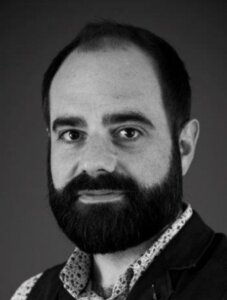 Dr Stephanos KONSTANTINIDIS
BIO
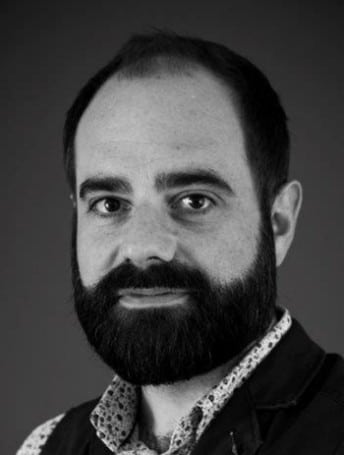
Stephanos KONSTANTINIDIS received a master degree in chemistry in 2000 and a PhD degree in 2004 from the University of Mons (Belgium). After a post-doctoral stay at the RWTH Aachen University in Germany in 2007, he established his research group at the University of Mons in 2011 while being appointed research associate of the National Fund for Scientific Research (FNRS).
For more than 25 years, he studies plasma-surface interactions and thin film deposition by plasma-based magnetron sputtering processes by combining both advanced plasma analysis and surface characterization methods. His team is also developing sputtering-based processes for the synthesis of nanomaterials. He has published more than 90 research articles and review papers, and has given 40 invited talks and lectures in international conferences. He has also participated to the organization of various international scientific meetings such as EMRS Strasbourg, ICMCTF San Diego, Plathinium, etc.
Stephanos is currently FNRS research director and professor at the University of Mons.
TALK
Plasma-based magnetron sputtering for thin film deposition and more.
This presentation will introduce the fundamental principles and key variants of reactive magnetron sputtering for thin film deposition. Special attention will be given to state-of-the-Art High-Power Impulse Magnetron Sputtering discharges (HiPIMS) which allow extended control over film characteristics.
Selected examples from recent research will be discussed too, including approaches such as glancing angle deposition (GLAD) which enables control of the film morphology at the nanometer scale.
The talk will conclude with an exploratory topic: the synthesis of nanoparticles via magnetron sputtering onto vacuum-compatible liquid substrates. This novel approach has led to the development of colloidal suspensions and polymer-based nanocomposites, which have been successfully implemented in a proof-of-concept chemical sensing platform.
 Tirumalai S SUDARSHAN
BIO
Is there still a need to introduce Dr Sudarshan to the SMT community?
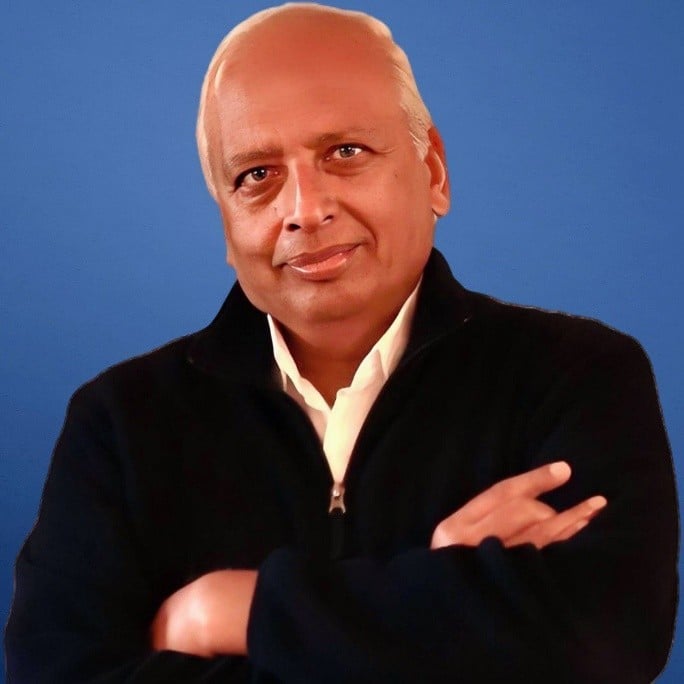
T.S. SUDARSHAN (Suds) is currently the President and CEO of Materials Modification, Inc. He received his B.Tech. in Metallurgy from the Indian Institute of Technology in Madras, India, and his M.S. and Ph.D. in Materials Engineering Science from Virginia Tech. He worked with Ashok Leyland in the Truck and Bus division as a Senior Metallurgist and later as the Director of R and D at Synergistic Technologies Richmond, Va. For the past 40 years he has been responsible for the management and technical development of innovative materials, processes, and techniques and the development of new technologies related to surface engineering and nanotechnology. He has been active in various committees throughout his career and is currently the Chair of the ASM-IIM lectureship committee. He also chaired the Surface Engineering Critical Technology sector and has been a member of IMR, JMEP, AMP and numerous Awards committees and has also served as a Trustee of ASM International and is currently the Vice President.
Dr. Sudarshan has been the recipient of numerous awards and honors, including the Design News Award and R&D 100 for the microwave plasma technique” Nanogen” and for the Plasma Pressure Compaction technique and the Outstanding Young Manufacturing Engineer award from SME. He has served on numerous committees for decades of the National Science Foundation, National Institutes of Health, U.S. Army, Michigan Economic Development Council, Department of Energy, National Research Council, Ohio Third Frontier and ASM International–The Materials Information Society. He has also served on the technical advisory boards of numerous companies over the last two decades. Dr. Sudarshan is also the editor of two journals Materials and Manufacturing Processes for 38 years and Surface Engineering for more than 28 years and Materials Technology for 4 years. He is a Fellow of ASM International, Fellow of International Federation for Heat Treatment and Surface Engineering and Fellow of Institute of Mining, Metals and Materials, UK and Distinguished Alumnus of IITM and was a member of the National Materials Advisory Board and has served on numerous NRC committees. He is the coauthor of over 200 publications and coeditor of 36 books including 30 books on surface modification technologies and holder of over 38 patents, developed 18 products and has given over 65 plenary and keynote lectures throughout the world and taught numerous short courses on surface engineering and nanotechnology in several countries.
TALK
Spectrum of Innovations in Surface Engineering
The increasing number of innovations have led to expansion in the challenges associated with performance of the various devices and applications. Coatings or surface modification have taken on significant roles in improving the performance and have created opportunities for entrepreneurs to create new businesses. Applications ranging from solar to clothing have seen improvements to the benefit of the end user. While many environmental challenges remain, there are sustained efforts to provide for non toxic solutions especially with perfluoro compounds that has resulted in many interdisciplinary solutions. As processes and solutions evolve the number of regulations and controls have also expanded with sometimes conflicting standards from different regions of the world. For the foreseeable future, there is significant opportunities both in research and in creation of businesses which could also be potentially sped up through the use of AI generated solutions. Innovations still need the human mind to craft the final solutions.
 Stéphane VALETTE
BIO
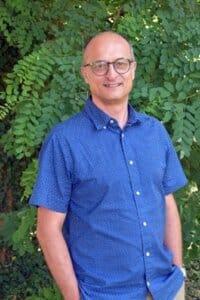
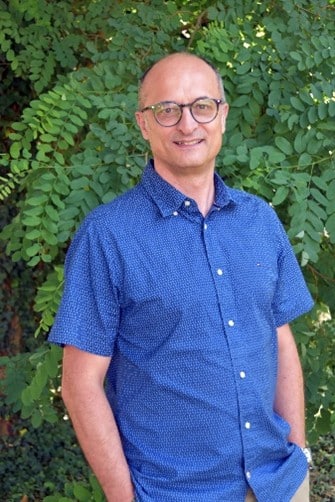
Stéphane VALETTE obtains his habilitation in 2012 on laser-material interaction in the femtosecond regime and the structuring of functional surfaces. He is full Professor at Ecole Centrale de Lyon and makes his research in the Laboratory of Tribology and Dynamics of Systems (LTDS UMR 5513) in the Tribology, Physico-Chemistry and Interface Dynamics team. In 2020, he creates the TREETOP (Tribology and Bio-inspired Surface Engineering) group and he works on the design and manufacturing of bio-inspired super-wetting surfaces. His expertise concerns the relationships between the morphology and the chemistry of complex surfaces, often multi-scale, and the behaviour of liquids in terms of wettability and adhesion. He develops experimental and numerical tools to describe the behaviour of liquid interfaces on such complex solid systems. He is co-author of 61 articles in international journals. In 2022, he creates the international master’s degree BIOSURF in biomimicry and surface engineering and he is actually the director.
TALK
Reflections on the super-hydrophobicity of bio-inspired surfaces
The development of super-hydrophobic surfaces is the subject of much theoretical and experimental research. We propose here a reflection on the origins of the super-hydrophobic character of multi-scale textured surfaces. For this, a comparative analysis of the wettability of a lotus leaf with surfaces manufactured by femtosecond laser texture is implemented. The temporal tracking of the wettability properties of textured surfaces makes it possible to sequence the key stages of the evolution of the surface towards superhydrophobicity. The comparison of the wettability results with an analytical model of the wetting on multi-scale surfaces and the observation of the liquid/gas and liquid/solid interfaces under the drop, allows the validation of the proposed approach. The tools implemented pave the way for the possibility of super-hydrophobic surface designs in all types of materials.
Paper submission
Paper submission is open : https://smt37.sciencesconf.org/
- Abstract Submission opens: October 1st
- Abstract Submission closes:
December 1st. extension until January 15th
Registration
Registration opens on December 10th : Online registration *
Early bird (before March 1st) ↓15%
Late registration (after April 10th) ↑30%
- Full conference (which includes: full access to the conference, coffee breaks and lunches during the conference and the social events on Wednesday and Thursday)
- Regular : € 750,00
- Student /PhD Student : € 400,00
- Symposium Art and Surfaces (which includes: admission, coffee breaks and lunche on April, 24th)
- Symposium A&S : € 100,00
- Accompanying Person (which includes: only lunches & social events)
- Accompanying : € 275,00
Only those participants who have paid their registration fees will be allowed in.
* Need help with the registration form, invoices, and purchase orders? Please consult this Manual
SMT 37 offers a great opportunity for companies providing service in surface treatment equipment and testing, and in materials analysis to showcase their products and service to the community of surface modification technologies.
The conference offers 3 packages for sponsors and exhibitors.
- Sponsoring: 1000€ , which includes
- logo of the company on the website and the communication of the conference
- possibility to send a leaflet or goodie to include in the conference bags
- Exhibitor: 1500€, which includes
- 1 full conference registration *
- an exhibition set** including 1 table, 2 chairs and 2 exhibition pannels.
- Combined package: 3000€, which includes
- sponsoring package
- 2 full conference registration *
- a bigger exhibition set** (2 tables, 4 chairs, 4 exhibition pannels)
- priority in the choice of the position of the set in the exhibition room.
* It is possible to add extra people to an exhibitor stand, at the early bird rate of the conference.
** The exhibition will take place in the same room as catering and poster sessions, to optimise exposure.
Interested people can contact the conference organizers by email.
The Faculty of Engineering of UMONS, in short FPMs, is also known as ‘Polytech Mons’ and was founded in 1837 as the ‘École des Mines’ (Mining School), the first Mining Engineering school in Belgium, by Théophile Guibal and Adolphe Devillez (bronze monument_shown below, in front of the historical building of Polytech Mons), two young alumni from ‘École Centrale des Arts et Manufactures de Paris’ (now ‘CentraleSupélec’), founded eight years before. In 1853, a new specialist area was created: Chemical Engineering, followed by Mechanical Engineering in 1862 and Electrical Engineering in 1897.
Today, 7 Master’s degrees in Engineering are proposed, and students (around 1000) can choose from the following specialist areas: Architectural Engineering, Chemical Engineering and Materials Science, Electrical Engineering, Energy Engineering, Computer Engineering and Management, Mechanical Engineering, and Geology and Mining Engineering.
The University of Mons (UMONS) was created in 2009 by the merging of Polytech Mons and the University of Mons-Hainaut. UMONS is a French-speaking university in the province of Hainaut, Belgium, near the French-Belgian border. It is approximately 50 kilometers from Brussels, the capital of Europe.
UMONS is one of five academic centers set up in the Wallonia-Brussels Federation, and is one of the founding members of the Pôle hainuyer. It assumes the co-presidency of this cluster, which groups together 3 universities, 3 high schools, 3 graduate art schools and 26 continuing education institutions, and offers nearly 600 courses in 21 fields of education to more than 30,000 students in the province of Hainaut. UMONS is one of the founding members of EUNICE, the European University for Customised Education.
With more than 1000 researchers, research objectives in UMONS are pursued both regionally and internationally. The common goal of all UMONS researchers is to develop expertise on a large scale, subsequently benefiting society, particularly the region.
In this framework, UMONS has recently joined forces with other local actors from the higher education sector to open the CampusUCharleroi, where all the delocalised programs from the partners in Charleroi are now hosted in a historical building. The dynamic of CampusUCharleroi has led to the creation of new joint programs, allowing the area to benefit from high quality higher education and research programs.
Through its research and close links with industry, UMONS is actively involved in regional development bith in Charleroi and Mons. It maintains close links with scientific research centers, as well as university spin-off and start-up companies, the majority of which are located on the outskirts of those 2 cities.
The research activities at UMONS are structured in 10 research institutes. One of them is the Research Institute for Materials Science and Engineering (or ‘MATERIALS Institute’) where research on manufacturing processes is carried out.
The UMONS Innovation Center concept enhances the visibility of the long-standing links of UMONS with a number of university-based research centers, and enable to work with any socio-economic organization, regardless of the TRL. The 5 UMONS Innovation Centers are Materia Nova, Multitel, Le CLICK, the Belgian Ceramic Research Center and C3E2D.
CHARLEROI
Charleroi, a post-industrial city that fascinates lovers of urban and/or underground activities, is situated to the north of the Metropolitan Area. Its periphery is made up of plateaus and green landscapes featuring small wooded valleys and a listed architectural heritage.
The southern part of the Metropolitan Area boasts a group of 5 lakes in the midst of a wild and unspoilt natural environment whose unique landscape features make this spot an ideal leisure and relaxing getaway destination in Europe.
It’s a land of contrasts where the landscapes mix and offset each other to create an unforgettable experience. Walk along the towpath of the Sambre river, at the heart of the industrial wasteland, surrounded by street art, then climb to the top of a slag heap, to admire the beautiful panorama across the city and the natural wealth of its hinterland.
Click here for more information about tourism.
ACCOMMODATION
The fee does not include accommodation and so you have to organize your own accommodation
We advise you to book your hotel as soon as possible because April is a period of high demand.
In the city center
| NOVOTEL Charleroi Centre **** Parking Rive Gauche Bd J Tirou34, Pl. Verte 17 6000 Charleroi Novotel Charleroi Centre HB134@accor.com 32 71 28 28 28 Book by email, before March 22, with this form for a reduced rate |
IBIS Charleroi Centre Gare *** Quai Paul Verlaine 12 6000 Charleroi Charleroi Centre – ibis H2088@accor.com 32 71 20 60 60 Book by email, before March 22, with this form for a reduced rate |
| Le Mayence – Apart Hôtel *** Rue du Parc, 53 6000 Charleroi www.lemayence.be lemayence@gmail.com 32 495 43 92 80 |
Chambre d’Hôtes 76Tour Boulevard Pierre Mayence, 76 6000 Charleroi 76, en face de la tour laurence.mundschau@skynet.be 32 473 553 100 |
| Auberge de jeunesse Arthur Rimbaud Rue du Bastion d’Egmont 3 6000 Charleroi Charleroi – Les Auberges de Jeunesse charleroi@laj.be 32 71 15 81 28 Book the “ LAJ Members” rate for a reduced rate |
In the surrounding
| IBIS Styles Charleroi Airport Aero 44 *** Rue Louis Blériot 4, 6041 Gosselies (15 km) ibis Styles Charleroi Airport Aero 44 HB9S6@accor.com 32 71 25 09 00 Book via this link for a reduced rate |
Hotel SOUTH ** 206 chaussée de Gilly 6043 Ransart (10 km) Hotel South – Charleroi info@charleroi-hotelsouth.be 32 71 25 65 65 |
VENUE
Campus UCharleroi – Centre universitaire Zénobe Gramme
Boulevard Solvay, 31 – 6000 Charleroi, Belgium
Google map
BY PLANE
From Brussels South Charleroi Airport
10 km from the city centre, Brussels South Charleroi Airport is the 2nd leading national airport.
Charleroi city centre can be reached from the airport with the shuttle bus (line A), which runs every 30 minutes during the week and once an hour at the weekend.
From Brussels airport
A train station is available directly at the Brussels Airport with a travel duration of around 1 hour and 45 minutes to Charleroi.
Train times can be found by checking the national rail timetables at www.belgianrail.be
BY TRAIN
Charleroi South Station is accessible from all the main Belgian railway stations and all major European cities, with a connection at Brussels-Midi. SNCB official website
From the train station you can easily access the city centrer in less than 10 minutes on foot. The campus UCharleroi is only a 15 minute walk from the station.
BY ROAD
Charleroi is located at the intersection of the E42 (Mons – Liège) and A54 (Charleroi – Brussels) motorways. The city can also be reached via the main Charleroi ring road (R3) and the N90 (Liège – Namur – Charleroi – Mons) and N5 (Charleville-Mézières – Charleroi – Brussels) national roads.

6000 Charleroi, Belgium
