

10 Years of PAER at UMONS: A Concrete Commitment to Welcoming Refugee Students
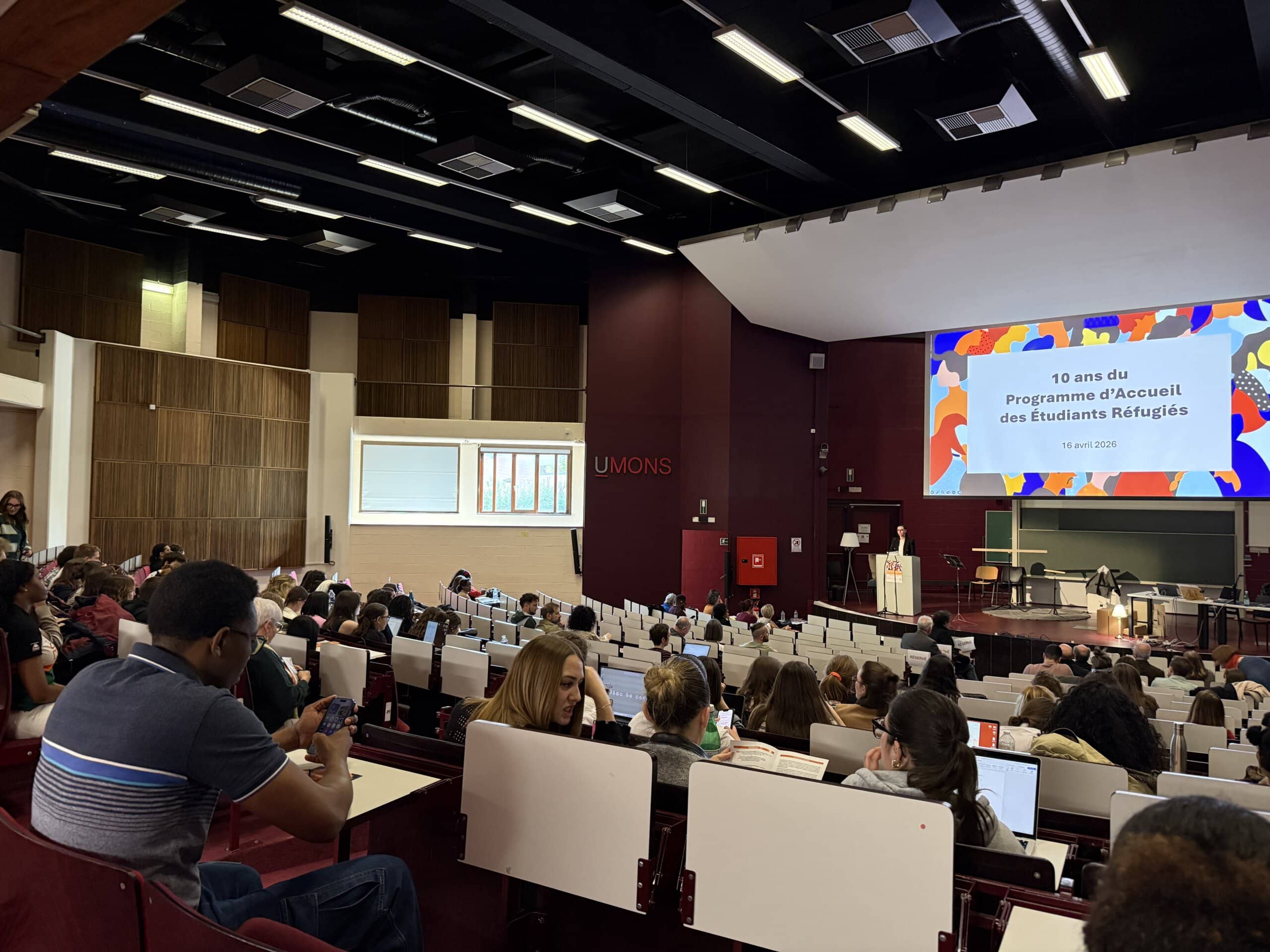 Ten years after its creation, UMONS’s Refugee Student Reception Programme (PAER) has confirmed its essential role in opening up higher education to people forced into exile. On the occasion of this anniversary, celebrated on April 16, 2026, on the Plaine de Nimy campus, the university looked back on a decade of concrete commitment to academic inclusion.
Launched during the 2015–2016 academic year and supported for several years by the International Relations Office, PAER has gradually developed a comprehensive support system for asylum seekers, refugees, and beneficiaries of international or temporary protection living in the Hainaut region. Its objective has remained unchanged: to enable these individuals to resume or continue higher education despite the disruptions caused by exile.
The review presented for this anniversary highlights the programme’s impact. Over ten years, nearly 50 students have accessed university studies at UMONS, including 14 who have already graduated. Each year, between 10 and 15 students have enrolled or re-enrolled in academic programmes, while around thirty have taken French as a foreign language courses—an essential step for successful academic integration.
Beyond the figures, PAER has stood out for its individualized approach. Beneficiaries have been supported at every stage of their journey, from administrative procedures for degree recognition and enrolment to financial assistance covering tuition fees, transport, and study materials. Learning French and personalized guidance have been key pillars of the programme.
International paths rooted in Mons
Since its launch, the programme has welcomed students from a wide range of geopolitical contexts, reflecting the evolution of global crises. Among the most represented nationalities are Palestine, Ukraine, Syria, and the Democratic Republic of the Congo. Over time, student profiles have diversified, shifting from the Middle East to Latin America, and more recently to Africa and Eastern Europe.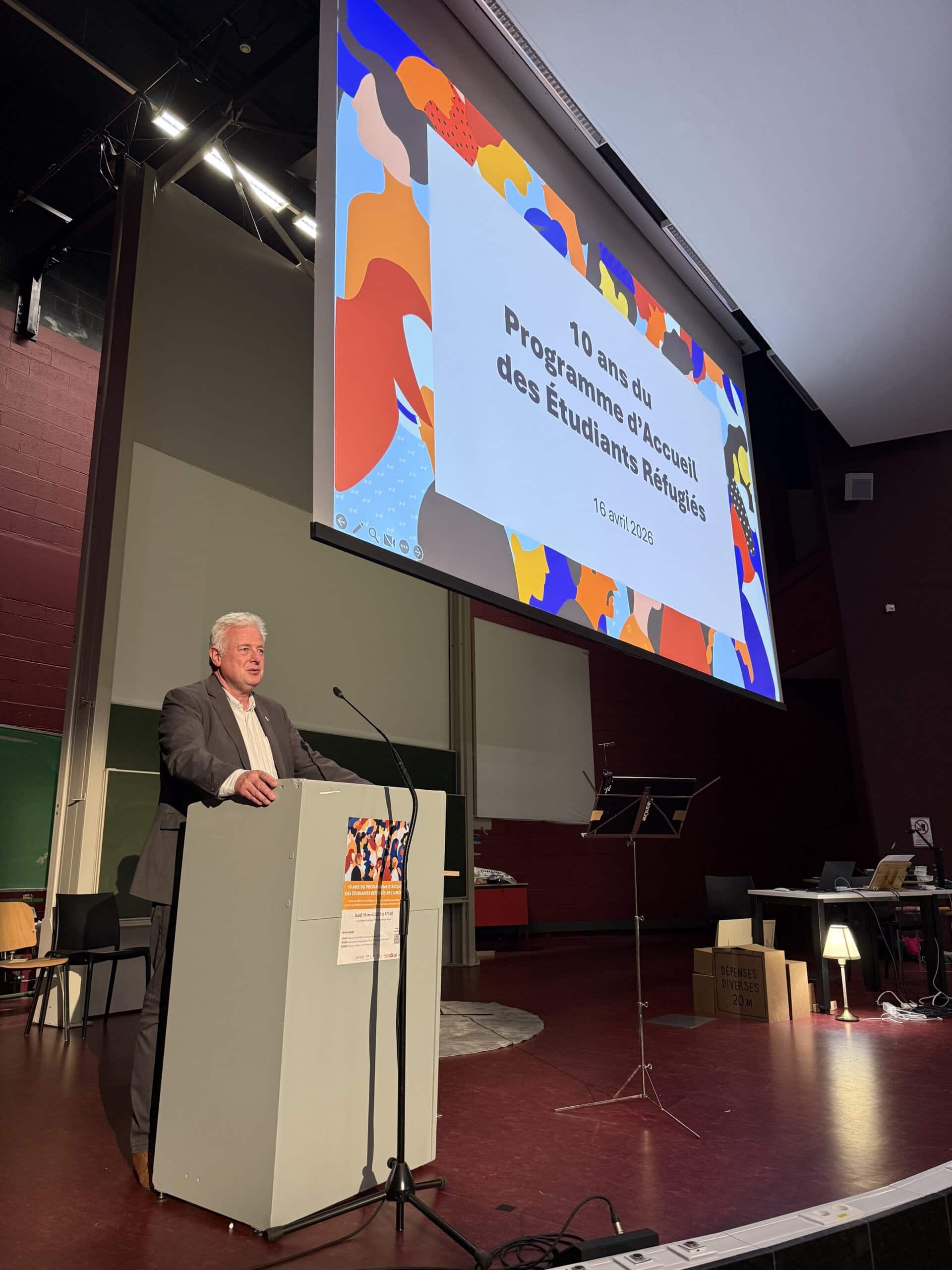
These students have enrolled across all UMONS faculties, with a strong presence in economics, languages, engineering, and science. Most have pursued master’s-level studies, indicating academic paths that were often already well advanced before their arrival in Belgium.
The anniversary evening marking the 10 years of PAER combined academic reflection, testimonials, and artistic creation. A presentation of the programme, the results of participatory research conducted by METIS master’s students, a cartographic performance, and a roundtable discussion with stakeholders from Mons’ migration network provided multiple perspectives on contemporary challenges related to reception and integration.
By celebrating this decade, UMONS has highlighted a programme that has become an essential part of its institutional landscape, demonstrating in concrete terms how a university can contribute, at its own level, to rebuilding life trajectories and offering new perspectives to those forced by exile to start over.
 Uguette, your virtual assistant